The heritage
Marimba, ocarina and oxcart: the sounds and symbols of folk Costa Rica
The wooden xylophone of Guanacaste, a beeswax ocarina and a painted cart that UNESCO lists as heritage: what a folk evening's music and props point to.
Reserve your evening ↗Quick answer
Two things anchor Costa Rican folk music: the marimba, the wooden xylophone that Tico Travel calls the heart of Guanacaste music, and the guitar that Footprint Travel Guides says is the popular companion to folk dances. Beyond the stage, the painted oxcart is the country's best-known craft symbol, and UNESCO lists the oxherding and oxcart traditions as intangible heritage. The booking page does not list the instruments or any props for the San José evening, so this guide explains what they are likely to evoke and does not describe a set list.
The marimba, southernmost of its kind
Tico Travel calls the marimba the wooden xylophone at the heart of Guanacaste music. Footprint Travel Guides says Costa Rica is the southernmost of the marimba-culture countries, and Wikipedia calls the marimba a very popular instrument in Central America. Couples dance to marimba and guitar, and the wooden bars give the punto guanacasteco its bright, tapped tone.
Guitar, accordion and the shift away from drums
Footprint Travel Guides says the guitar is popular for accompanying folk dances, and that among various indigenous groups the drum and flute are traditional while the guitar and accordion are replacing them. It names the chirimía and quijongo as instruments that have not fully disappeared in Guanacaste's Chorotega region, and the dru mugata, a beeswax ocarina played by the Guaymí, as the only truly pre-Columbian instrument still found.
Songs that Costa Ricans know
The same guide says Los Talolingas wrote La Guaria Morada, regarded as a second national anthem, and that Lorenzo Lencho Salazar is known for humorous songs in a vernacular style. If a performer plays something that the Costa Rican guests hum along to, a song like that is a fair guess, though the booking page names no repertoire.
The painted carreta
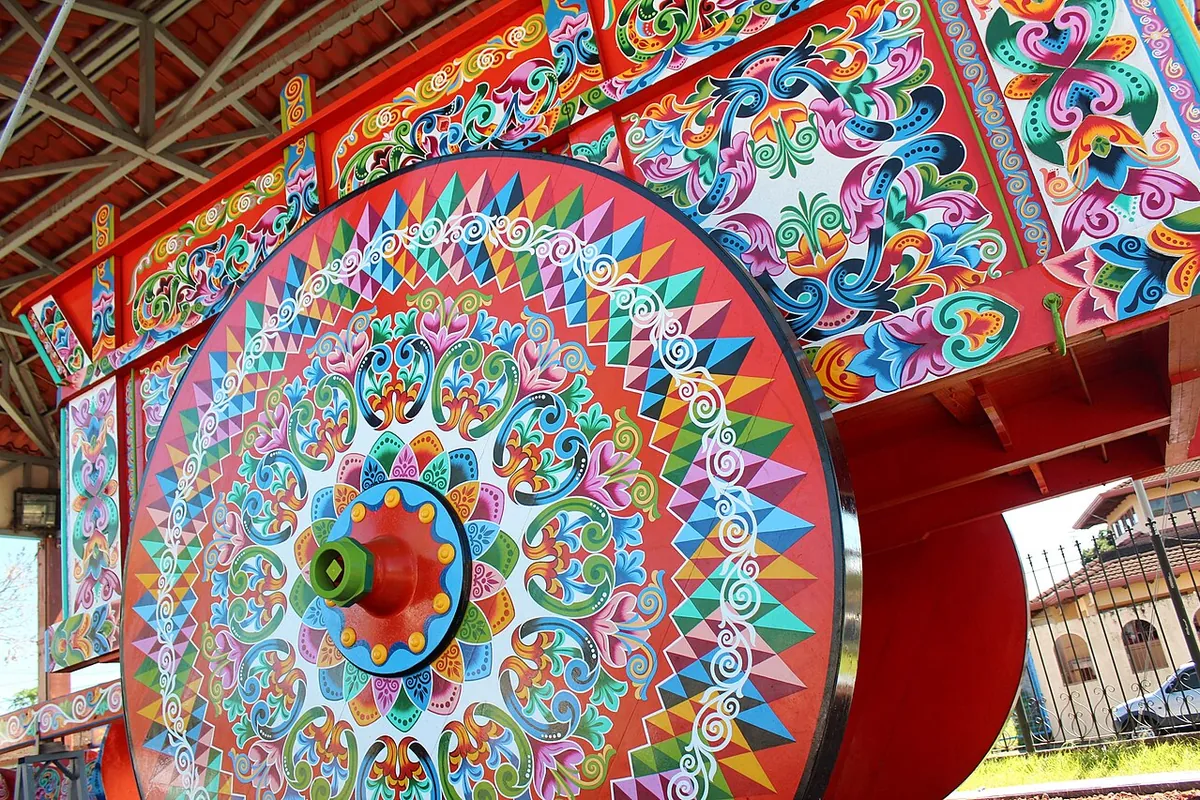
UNESCO says the oxcart is the product of Costa Rica's most famous craft, dating from the mid-19th century, when carts hauled coffee from the Central Valley to Puntarenas on the Pacific coast, a trip of 10 to 15 days. Its spokeless wheels were a hybrid of an Aztec disc and the Spanish spoked wheel, which helped it move through mud, and each cart was tuned to chime when a metal ring struck the hubnut.
From workhorse to symbol
UNESCO adds that painting began in the early 20th century, that each region once had its own patterns so a driver's origin could be read from the wheels, and that flowers, faces, miniature landscapes and pointed stars were added later. After trucks and trains replaced them, carts became symbols of rural life and appear in parades and festivals. UNESCO proclaimed it in 2005 and listed it in 2008.
What this tells you about the evening
A folk dinner draws on these symbols: the marimba's sound, the sabanero costume, the colours of the cart. They are why a staged evening can feel rooted even though it is staged. The booking page lists no props or instruments, so enjoy any you meet as a bonus and use this guide for the context.
Frequently asked questions
Is the marimba the national instrument?
The sources used here call it central to Guanacaste music but give no national-instrument decree, so this guide does not claim one.
Will there be live music?
The booking page describes a folk dance performance but does not detail the music. Check your confirmation for specifics.
Is the oxcart part of the evening?
The booking page does not mention it. It is background on the folk tradition.
Sources