The food
Gallo pinto, casado and the Costa Rican table: what a traditional meal means
Rice and beans two ways, a lunch named for married men and the other staples a Costa Rican meal is built from, sourced to Wikipedia.
Reserve your evening ↗Quick answer
A traditional Costa Rican meal is built on rice and beans. Wikipedia says gallo pinto, rice and beans stir-fried together, is the national dish, and that the casado, the traditional lunch, serves them side by side with a meat and a salad. The booking page for the San José dinner calls its meal traditional and its summary mentions a buffet, but it lists no dishes, so this guide is background to the cuisine and not a menu for the evening. If you have an allergy or a diet, raise it with GetYourGuide before you travel.
Gallo pinto, the spotted rooster
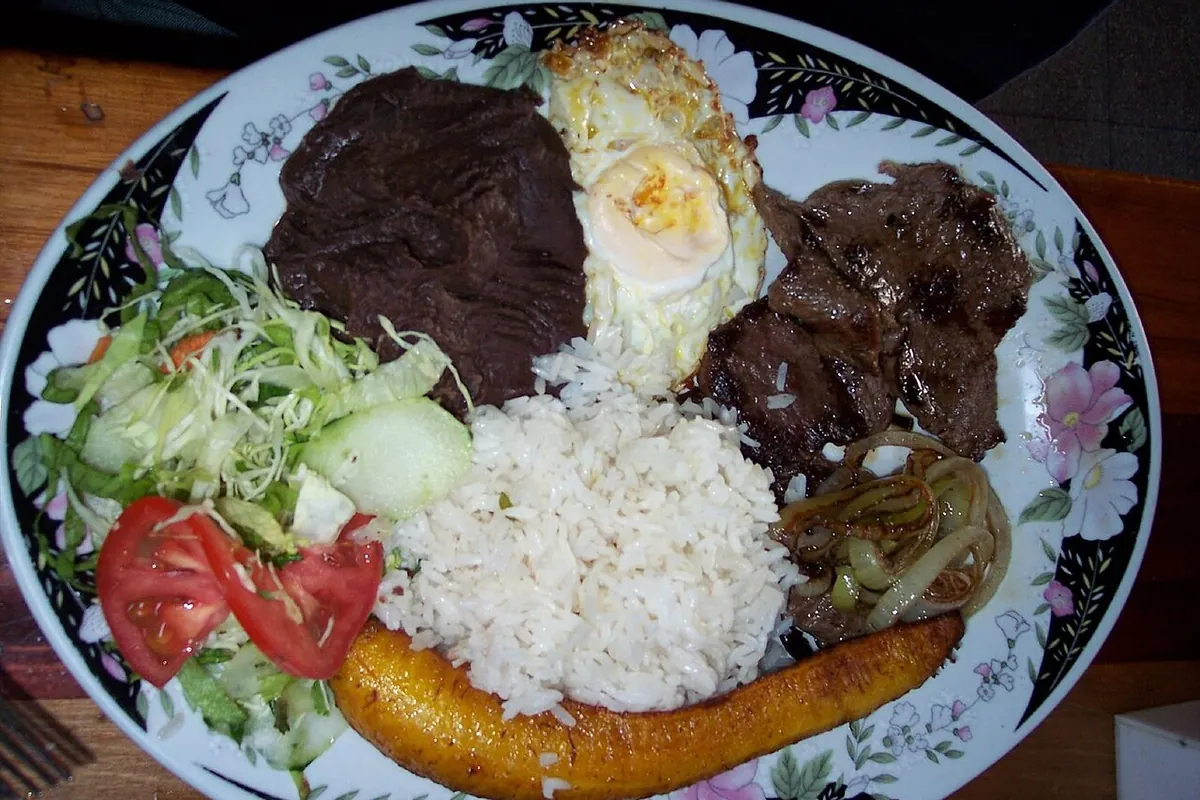
Wikipedia says gallo pinto means spotted rooster in Spanish, named for the speckled look of rice cooked with black or red beans. In the Valle Central the dish is usually made with black beans, peppers, onions and cilantro, and the Guanacaste version usually uses red beans and is fattier, a third version includes coconut milk. Home cooks traditionally use leftover rice and beans from the day before, and Lizano sauce is the usual companion.
A story about a hen
Wikipedia retells an origin story in which a San José farmer promised a speckled hen for a Saint Sebastian feast, found it was not enough and served rice and beans instead. The article itself says the truth of the story matters less than its place in the culture. Treat it as the kind of tale a guide might tell at a folk dinner, a charming explanation and not a documented fact.
The casado, a lunch for married men
The cuisine page on Wikipedia says casado means married man in Spanish, reportedly from wives packing their husbands' lunches in banana leaves for fieldwork. It serves rice and beans side by side, not mixed, with usually a meat, such as beef, fish, pork chop or chicken, and a salad. Corn tortillas accompany casados, the page adds.
Stews, tamales and fried pork
Wikipedia describes olla de carne as a beef stew, literally a pot of beef, that stems from Spanish influence after colonial times and typically includes cassava, potatoes, maize, green plantains and squash or chayote. Tamales are served at nearly all celebrations, especially Christmas, made from cornmeal dough steamed in plantain or banana leaves. Chicharrones, fried crispy pork, are popular in bars, and chifrijo combines chicharrón with beans.
What to drink
The cuisine page lists guaro, a strong vodka-like liquor from sugarcane, usually drunk in a guaro sour or as a shot, and coffee, one of the country's largest exports, served black or as café con leche and traditionally drip-brewed in a chorreador. The booking page does not say whether drinks are included, so check before you assume.
What this means for the evening
Because the page lists no dishes, any of these might appear or none. The useful takeaway is the pattern: rice and beans at the centre, a protein beside them, corn and plantain around the edge. If a guide names a dish, you will recognise the family it belongs to. Dietary needs are worth raising in advance through the booking page, since the dishes are not listed and the kitchen's flexibility is not described.
Frequently asked questions
Is the meal vegetarian-friendly?
The booking page lists no dishes and says nothing on diets, so raise it with GetYourGuide before you travel.
Are drinks included?
The booking page does not say. Check your option's details and your confirmation e-mail.
What is Lizano sauce?
Wikipedia says the Valle Central version of gallo pinto often includes it and that the dish is eaten with it. It is a Costa Rican table sauce.
Sources